Superseding Without Destroying History
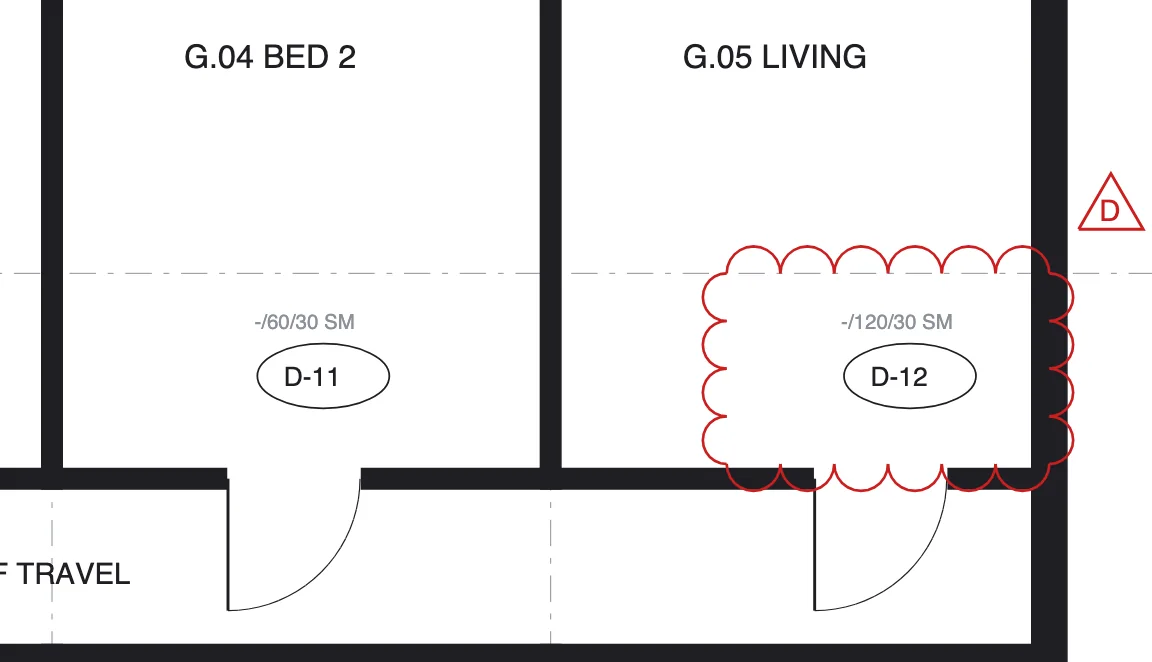
Superseding is the act of marking a document revision as no longer current because a later revision replaces it. Done properly, it is a status change and nothing more: the old revision keeps its file, its history, its attached findings and RFIs, and stays retrievable — it simply stops being the document anyone should build from. Done improperly — deleted, overwritten, renamed to OLD_A-102_final_v2.pdf — it destroys exactly the evidence a project needs when money is in dispute.
Why old revisions are evidence, not clutter
Almost every contested question on a construction project resolves to a question about a superseded document:
- Variations. "This was always in the drawings" versus "this was introduced at Rev E" is decided by opening Rev D. If Rev D is gone, the party who deleted it argues from memory against the other side's paper.
- Defects. The slab was poured in March off whatever was current in March. Whether the setdown was wrong on the drawing or wrong in the pour depends on the March-current revision, not today's.
- Time bars. A claim window may run from the receipt of the information that gives rise to the claim. Proving which revision was received when requires the revision and the transmittal to still exist.
- Certification. A building surveyor certifying against a documentation set needs to know which set. If the archive shows only the final state, nobody can demonstrate what the approval was actually granted against.
Deleting a superseded drawing saves nothing — storage is effectively free — and forfeits all of the above. There is no scenario where deletion is the right call. "Cleaning up the folder" is how projects walk into disputes unarmed.
The mechanics of a clean supersede
- Status change only.
current → superseded, with timestamp, actor and the identifier of the replacing revision. Nothing about the old document itself changes. - Explicit chain. Rev D records that it supersedes Rev C; Rev C records that it was superseded by Rev D on a date. The chain is what lets you walk a document's history in either direction — and what lets revision comparison find the right predecessor to compare against. See unclouded revision changes for why that comparison matters.
- Reversible. Superseding the wrong document, or superseding on receipt of a revision later withdrawn, must be undoable. A status change reverses in one click; a deletion does not.
- Visible but distinct. Superseded revisions stay in the register and the viewer, clearly stamped — struck through, badged, watermarked — never hidden. Hiding them just moves the "which revision is this?" confusion from the register into people's download folders.
- Human-confirmed. Automated systems can detect that A-102 Rev D has arrived and propose superseding Rev C — that pairing is machine work. The confirmation should be a human click, because a false pairing (a reissued sheet that is not actually a successor, a split sheet, a renumbering) silently corrupts the chain. Propose automatically, confirm manually, undo freely: the pattern the ParitySense workflow enforces.
The paper problem
Digital superseding does not recall the prints. A subcontractor working off a Rev B print is unaffected by anything your document system did. Two controls close the gap: transmit every superseding issue to every party who held the prior revision (with the transmittal record to prove it), and make the site rule cultural — current-revision checks before set-out on anything structural, fire-rated or waterproofed. The register tells you who to chase because it tells you who was issued Rev B.
Retention
Keep superseded documents at least as long as any limitation period applying to the project. In Australia these vary by state and by cause of action, and for building work can extend many years past completion — long past the point anyone remembers the project's folder structure. The practical policy is simpler than the legal analysis: retain the full revision history permanently. The archive that decides a dispute in your favour costs a few gigabytes; assembling it retrospectively from other parties' records costs a discovery process.
FAQ
What does superseding mean?
Marking a revision as no longer current because a later one replaces it — a logged status change, with the old revision kept stored, retrievable and clearly stamped.
Why not just delete old revisions?
They are the evidence variation, defect and time-bar disputes are decided on. Deletion saves nothing and forfeits your side of every argument about what a drawing showed at a point in time.
Do findings and RFIs move to the new revision?
Not automatically. They stay pinned to the revision they were raised against; carrying an item forward is an explicit, logged decision.
How long should superseded revisions be kept?
At minimum through the applicable limitation periods, which for Australian building work can run years past completion. Practically: permanently.
Run it through ParitySense alongside your manual review and measure the delta.
See how it works