Blog › Tender-to-Contract Risk
Addenda in Tender Periods: Tracing Every Addendum's Impact Through the Set
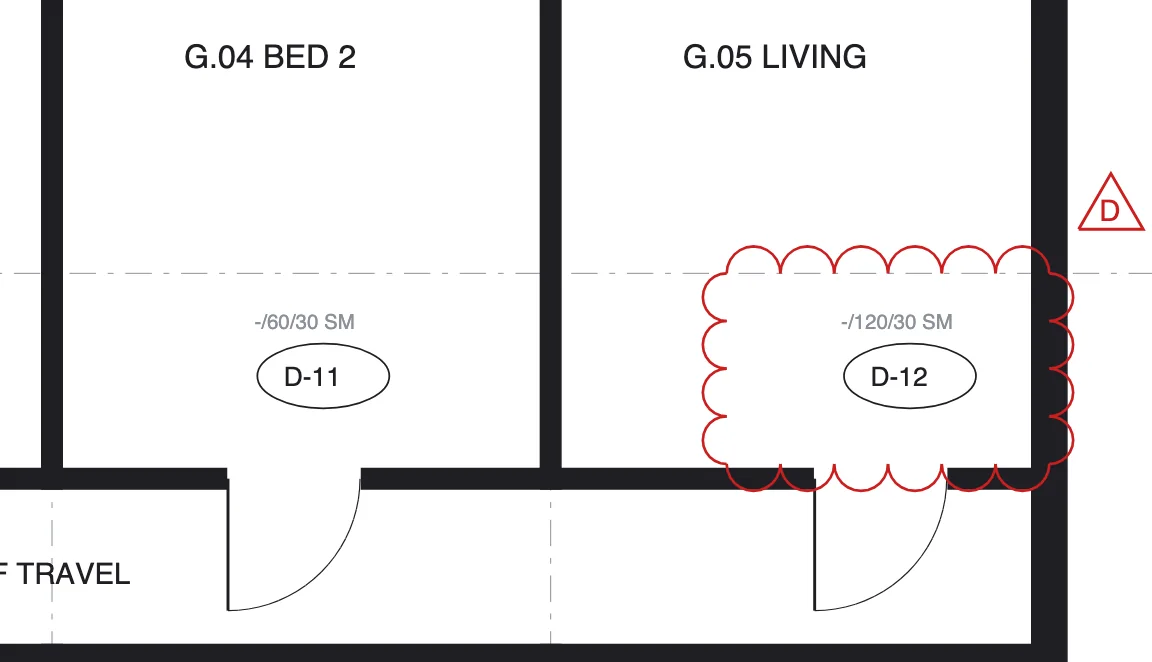
A tender addendum is a formal amendment to the tender documents issued during the tender period — revised drawings, changed spec sections, answers to tenderer questions, altered tender conditions. Your bid is deemed to be priced on the set as amended by every addendum, whether or not your pricing team actually absorbed them. The gap between "acknowledged addendum 4" and "re-priced everything addendum 4 touched" is where tender-stage risk concentrates, and this article is a method for closing it.
The failure mode
Addendum 3 lands ten days before close. It contains fourteen revised drawings, two amended spec sections and answers to thirty tenderer questions. The estimating team is mid-flight: subcontract quotes are arriving priced on the original set, the BoQ take-off is half done, and the addendum's transmittal lists document numbers, not consequences. Under time pressure, the team acknowledges the addendum on the tender form — a compliance requirement — and absorbs perhaps 60% of its actual content. The remaining 40% becomes unpriced scope that surfaces during delivery, on a job won partly because it was underpriced.
The fix is not heroics near close. It is a tracing discipline applied from addendum 1.
Step 1 — Register every addendum on arrival
One row per addendum: number, issue date, transmittal reference, list of documents amended (with old and new revisions), and a status column that reads received → traced → priced → acknowledged. "Acknowledged" is the last state, not the first — you acknowledge what you've absorbed, and the register proves the order of operations if it's ever questioned.
Step 2 — Build the amendment matrix
This is the tool that does the real work: a matrix of documents × addenda. Each cell records what each addendum did to each document — revised, replaced, deleted, or added it. Reading down a column shows an addendum's full footprint. Reading across a row shows a document's amendment history: A-102 was Rev B at issue, Rev C via addendum 2, Rev E via addendum 5.
Two things the matrix exposes that nothing else does:
- Compound amendments. A document amended by two addenda must be read at its final state — pricing off the addendum-2 revision after addendum 5 superseded it is a live error the matrix makes visible.
- Ripple effects the transmittal doesn't list. An addendum that revises the door schedule implicitly affects the hardware spec, the fire report references and three architectural sheets — none of which appear on the transmittal. Trace the references outward from each amended document; the addendum's true footprint is always larger than its cover sheet.
Step 3 — Compare the revisions, don't trust the clouds
Good practice says revised addendum drawings cloud their changes. Compressed tender programs say otherwise: unclouded changes in addendum issues are routine, because the consultants are under the same time pressure you are. The safe method is to compare each amended document against the revision it supersedes and work from the actual differences — clouded and unclouded — rather than from the drafter's annotations. This is mechanical, high-volume reading, which is why it's the part worth automating: ParitySense pairs each new revision with its predecessor and lists every detected change, flagging the unclouded ones, so the estimator's time goes to pricing impacts rather than finding them.
Step 4 — Push impacts to the people pricing
The matrix is only useful if it drives action. For each addendum: which trade packages are affected, which subcontractors were quoting on now-superseded documents, and who re-issues what to whom. A subcontractor quote received the day before an addendum that changes their scope is a mispriced quote sitting in your bid — the matrix tells you which ones to chase.
Step 5 — Carry the trace through to contract
At award, the amended tender set becomes the baseline for the tender-to-contract comparison. Your amendment matrix defines exactly what "the set you priced" means — final revision of every document, addenda incorporated. Check the executed contract set against it: an addendum missing from the contract documents, or a superseded revision bound in its place, is precisely the class of defect the pre-execution review exists to catch, and the broader stakes are covered in the tender-to-contract risk guide. Discrepancies that survive into the executed set get resolved by the order of precedence — usually not in favour of whoever failed to trace them.
What good looks like at close
Every addendum at status priced before it is acknowledged. A matrix showing the final revision of every document and which addendum put it there. A short list of tender qualifications covering anything that couldn't be absorbed in time. That's the whole system — and it is the difference between a bid priced on the set as amended and a bid priced on the set as remembered.
FAQ
What is a tender addendum?
A formal amendment to the tender documents issued during the tender period — revised drawings, changed specification sections, answers to tenderer questions, or altered conditions. Tenderers acknowledge each addendum in their bid, and the tender is deemed priced on the set as amended.
Why are late addenda especially dangerous?
They arrive after subcontract prices are in. An addendum three days before close changes documents subcontractors priced a fortnight ago; unless affected packages are re-quoted or the change priced internally, the bid contains work nobody has costed.
Do addenda changes need to be clouded?
Good practice, but not reliable under compressed tender programs. Unclouded changes in addendum drawings are common — compare each revised document against its predecessor rather than trusting the clouds.
What happens to addenda after contract award?
They should be incorporated into the contract documents, physically or by reference. If an addendum you priced is missing from the executed set, the tender-to-contract comparison is where you catch it — before signing.
Run it through ParitySense alongside your manual review and measure the delta.
See how it works